
VEVOR Hydraulic Steering Kit Review
VEVOR hydraulic steering kits are usually noticed for one simple reason: they give you the main parts of a boat hydraulic steering system in one package without moving straight into the price range of some established marine steering brands.
But VEVOR does not have only one kit. There are different power and hose-length versions, so choosing the correct one matters. This review covers the 90 HP, 150 HP and 300 HP VEVOR hydraulic steering options, what comes with them, installation, bleeding, fluid, parts and the main things I would check before buying.
VEVOR Hydraulic Steering Kit at a Glance
VEVOR currently sells hydraulic outboard steering kits in several power versions. Its product listings show 90 HP, 150 HP and 300 HP choices, with different hose lengths available on many versions.
Affiliate Disclosure: As an Amazon Associate I earn from qualifying purchases.
| VEVOR Version | Engine Rating | Typical Hose Options |
|---|---|---|
| 90 HP Kit | Up to 90 HP | 20, 24 or 26 ft depending on listing |
| 150 HP Kit | Up to 150 HP | 20, 24 or 26 ft |
| 300 HP Kit | Up to 300 HP | Several lengths, including 26 ft |
Best for: Boat owners looking for a complete-value hydraulic steering package for a compatible single-engine, single-station outboard setup.
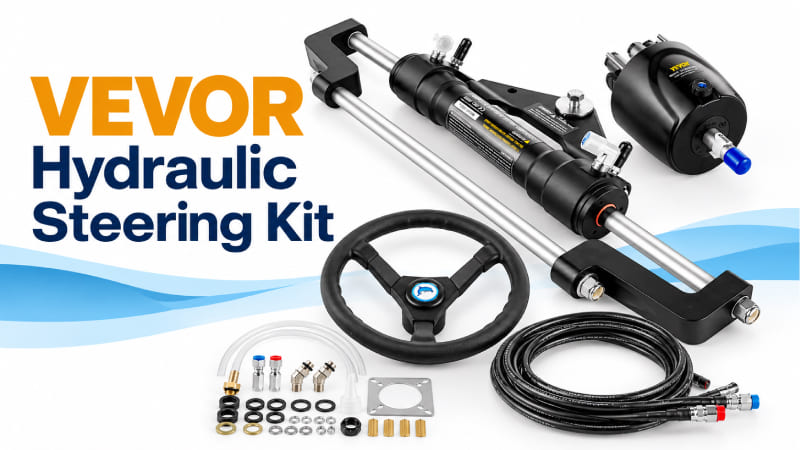
One useful point is that VEVOR packages the cylinder, helm pump, two high-pressure hoses and installation accessories together on its complete kits. That makes the initial parts list fairly simple compared with systems where the hoses must always be selected separately.
Key Features:
- 90 HP, 150 HP and 300 HP versions available
- Hydraulic helm pump and two-way lock cylinder
- Two high-pressure steering hoses on complete kits
- Multiple hose lengths available
- Designed mainly for single-station, single-engine boats
Available VEVOR Hydraulic Steering Kit Models
The 90 HP version is the smaller option. VEVOR lists it for outboards up to 90 HP, and current versions are available with different hose lengths. One newer 90 HP system uses a 1000 psi helm pump and gives about five turns from lock to lock.
The 150 HP kit is one of the more common VEVOR hydraulic steering systems. Current listings show 20-foot, 24-foot and 26-foot hose choices. The complete package includes the steering cylinder, helm pump, two high-pressure hoses and installation accessories.
VEVOR also sells a 300 HP version for larger outboards. Current listings include a 300 HP system with a 1000 psi helm pump and 26-foot hoses. This is not simply the 150 HP kit with a different label, so choose the power version that matches the intended application.
VEVOR changes product configurations and listings from time to time. For that reason, check the exact power rating, hose length and included parts on the product page before ordering.
What Comes With the VEVOR Hydraulic Steering Kit?
The complete VEVOR kits normally include a hydraulic steering cylinder, helm pump, two high-pressure hoses and an accessory set for installation. The exact fittings and hose length depend on the version.
This is one of the practical advantages of the kit. You are not starting with only a helm and cylinder and then discovering that the steering hoses are another major purchase.
Still, check everything in the box before beginning installation. A complete kit does not guarantee that every boat needs exactly the same mounting hardware or hose routing.
VEVOR Hydraulic Steering Installation
Installation starts with checking whether the cylinder can fit around your outboard and transom area. Do this before drilling or removing a working steering system. The engine needs to turn fully in both directions and tilt without the cylinder or hoses hitting another part.
Next, mount the helm at the console and route the two hydraulic hoses toward the engine. Avoid sharp bends, hot areas, moving hardware and places where the hose can rub against an edge.
Some VEVOR versions use cut-to-fit hose arrangements and quick-fit fittings. Follow the instructions for the exact kit rather than assuming every VEVOR hose connects in the same way.
Once the helm, hoses and cylinder are connected, the hydraulic system must be filled and bled before normal use. Test the full steering and tilt movement while the boat is still in a safe place.
VEVOR Hydraulic Steering Bleeding Procedure
Air inside hydraulic steering can make the wheel feel spongy and can delay cylinder movement. VEVOR specifically says the system needs to be filled with oil and purged of air before use.
Fill the helm through its filler port, then follow the bleeding direction shown in the manual for the cylinder. Turn the steering wheel as instructed while opening and closing the correct bleed point so trapped air can leave with the fluid.
Keep enough fluid at the helm during the process. If the fluid level drops too far, air can enter again and you may have to repeat the bleeding process.
After bleeding, move the steering from side to side. If response is delayed or the wheel still feels soft, VEVOR recommends checking the hydraulic fluid and purging the system again.
VEVOR Hydraulic Steering Fluid
Use hydraulic steering oil that meets the requirements stated in the manual supplied with your exact VEVOR kit. VEVOR has several steering versions, and I would not choose fluid only from a general hydraulic-oil label.
The fluid has to work with the helm pump, cylinder and seals. If you are topping up an existing system, first identify what fluid is already in it and follow the manufacturer's instructions rather than mixing unknown oils.
How Does VEVOR Hydraulic Steering Work?
The helm behind the steering wheel works as a hydraulic pump. When you turn the wheel, the pump moves fluid through one hose toward the cylinder. Fluid returns through the other side of the system.
This movement pushes the cylinder and turns the outboard. VEVOR uses a two-way locking design in these kits to help hold the steering position and reduce unwanted movement from engine feedback.
Hydraulic steering can also remove the long mechanical cable found in cable steering systems. That can give a smoother steering feel when the system is correctly sized, installed and bled.
Common VEVOR Hydraulic Steering Problems
A lower-cost kit still needs the same basic checks as other hydraulic steering systems. Most problems are easier to deal with when you notice them early.
Spongy steering: Air may be trapped inside the system. Check the fluid level, inspect for leaks and bleed the steering again.
Slow steering response: Low fluid or air can cause delayed movement. VEVOR specifically recommends checking the fluid and purging air if steering performance decreases.
Fluid leak: Inspect the hose connections, helm and cylinder. A leaking hydraulic steering system should be repaired before normal boat use.
Hard or restricted movement: Check hose routing and make sure the cylinder is not hitting the engine, transom or nearby hardware.
Loose fittings after installation: Recheck connections carefully before launching. Do not keep tightening blindly if a fitting continues to leak; find the actual cause.
VEVOR Hydraulic Steering Parts and Seal Kit
Parts availability is worth checking before buying any steering system. With VEVOR, identify the exact kit and cylinder before looking for a replacement seal, hose, fitting or helm part.
Searches for a VEVOR hydraulic steering seal kit are common, but do not assume a generic seal set fits every VEVOR cylinder. Compare the model, cylinder design and dimensions with the replacement part information.
This is also important if the system is several years old. Product versions can change, so keeping the original manual and order information can make future parts searches much easier.
VEVOR Hydraulic Steering Maintenance
Check the steering cylinder and hose connections for oil before using the boat. Look over the hoses for rubbing, cracks, sharp bends or damage, especially where they move near the outboard.
Pay attention to changes at the wheel. If steering suddenly feels softer, harder or slower than normal, inspect the system instead of continuing to use it as usual.
Also keep the cylinder rod and exposed steering hardware clean. Salt, dirt and corrosion around moving parts can create problems even when the hydraulic components themselves are still working.
Is VEVOR Hydraulic Steering Any Good?
VEVOR's main attraction is value. The complete kits include the major steering components and hoses, and there are several power and hose-length choices. That can make them interesting when you want hydraulic steering without paying only for a premium brand name.
There is another side to consider. Steering is a safety-critical boat system, so price should not be the only reason to choose a kit. Correct engine fitment, installation quality, hose routing, bleeding and future replacement-parts availability matter just as much.
I would compare the exact VEVOR package with SeaStar, BayStar and Uflex for the same boat. Look at what is included and what the engine actually requires rather than comparing only the number printed on the horsepower label.
Which VEVOR Hydraulic Steering Kit Should You Choose?
Start with the engine rating. The 90 HP version is the natural place to look for a smaller compatible outboard. The 150 HP version covers the middle of the range, while the 300 HP version is intended for larger applications.
Then choose the hose length. Buying a 26-foot kit for a boat that needs a much shorter run can create unnecessary hose routing, while choosing hoses that are too short creates a bigger problem.
Finally, check physical fitment around the engine. Horsepower alone does not tell you whether the cylinder has enough clearance. Confirm the exact VEVOR application and dimensions before ordering.
Frequently Asked Questions
Is VEVOR hydraulic steering any good?
VEVOR offers complete kits at a value-focused price, but correct fitment and installation are important. Compare the exact kit with other systems for your boat.
What VEVOR hydraulic steering kit sizes are available?
Current VEVOR listings include 90 HP, 150 HP and 300 HP hydraulic outboard steering options with several hose lengths.
How do you bleed VEVOR hydraulic steering?
Fill the helm and follow the kit's bleeding procedure to move fluid through the system until trapped air is removed.
What fluid does VEVOR hydraulic steering use?
Use hydraulic steering fluid that meets the requirements in the manual for your exact VEVOR kit. Avoid mixing unknown fluids.
Does a VEVOR hydraulic steering kit include hoses?
Complete VEVOR kits generally include two high-pressure hoses. Available lengths depend on the specific kit version.