
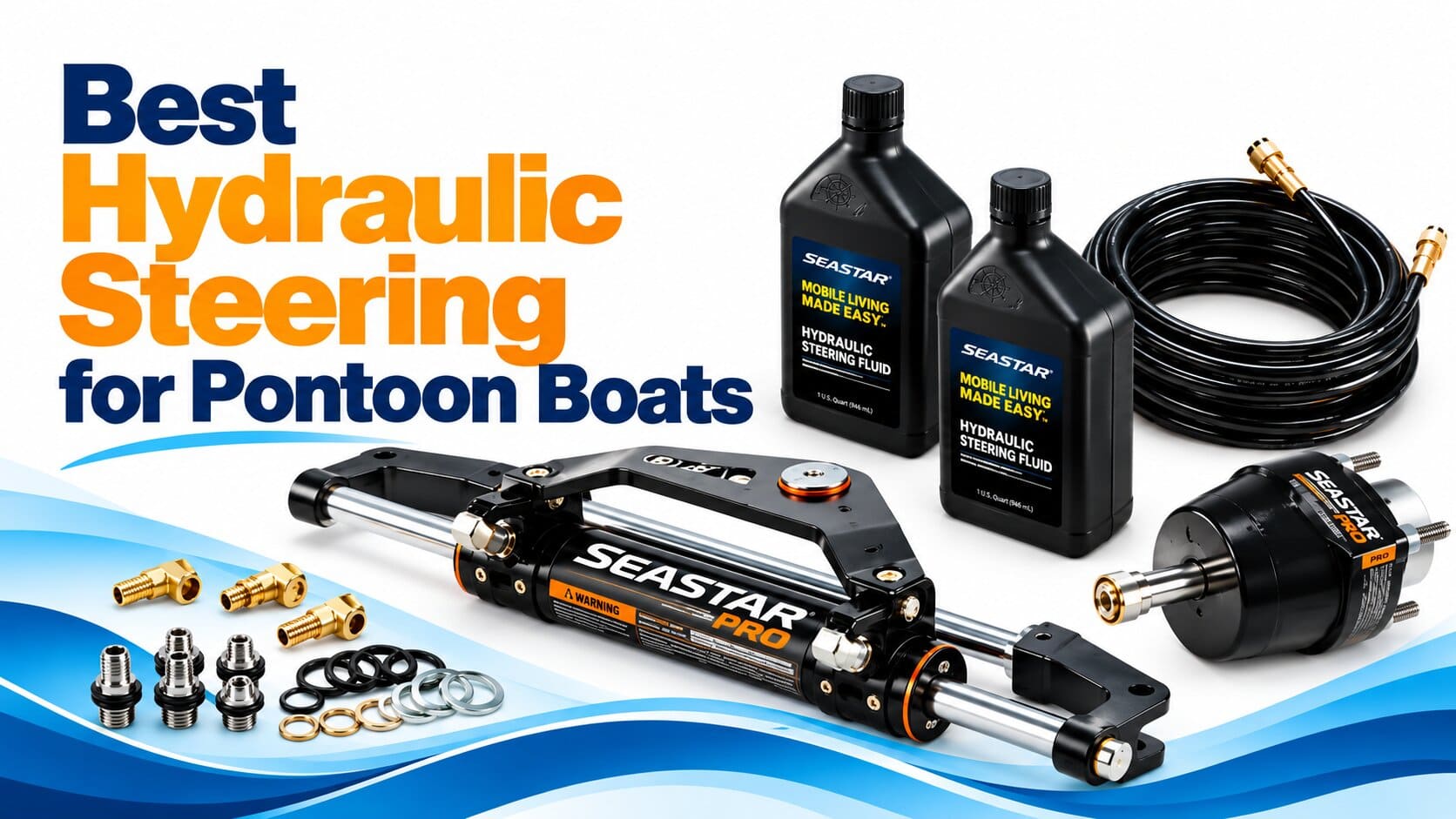
Best Hydraulic Steering for Pontoon Boats
A pontoon boat is normally built for relaxed cruising, but that does not mean the steering should feel heavy. A larger outboard, an aging steering cable, or the wrong steering setup can make turning the wheel more work than it should be. A properly selected hydraulic system can give you smoother control and reduce the engine torque you feel through the wheel.
If you are looking for the best hydraulic steering for pontoon boats, start with the engine and the type of pontoon you own. A modest single-outboard family pontoon and a powerful performance tritoon do not need the same equipment. In this guide, I compare four choices, explain what fits a pontoon boat steering system, and show what to check before changing from cable to hydraulic steering.
Quick Comparison
These are starting points, not universal fitment approvals. Check your exact outboard, horsepower, boat speed, cylinder clearance, and manufacturer's application guide before placing an order.
Affiliate Disclosure: As an Amazon Associate I earn from qualifying purchases.
| Steering System | Best For | Check Price |
|---|---|---|
| SeaStar Hydraulic Steering Kit | Standard choice for many single-outboard pontoons | Check Price on Amazon |
| Uflex HYTECH Hydraulic Steering Kit | Smaller compatible outboards, within HYTECH limits | Check Price on Amazon |
| VEVOR Hydraulic Steering Kit | Budget-minded single-outboard conversions, subject to fit | Check Price on Amazon |
| SeaStar Pro Hydraulic Steering Kit | Specialized high-speed, performance-approved setups | Check Price on Amazon |
SeaStar Hydraulic Steering Kit
SeaStar is the first system I would compare for a pontoon with a medium or larger single outboard. Standard SeaStar outboard hydraulic steering uses a helm pump, a compatible cylinder, and two hydraulic lines. When properly sized for the engine and boat, it can make steering feel more controlled than an old mechanical cable. Read our full Seastar Hydraulic Steering Kit review for a closer look at the kit and fitment details.
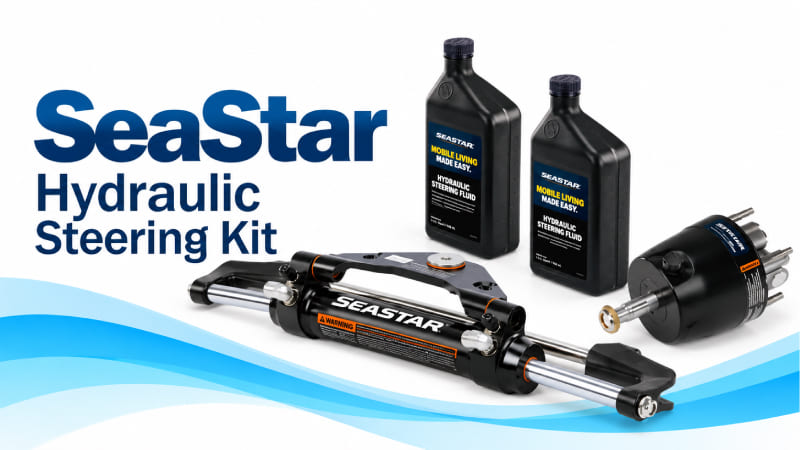
Best for: Pontoon owners wanting a well-established system for a compatible single-outboard installation.
The important part is choosing the correct cylinder, not just ordering a box labeled SeaStar. Check the engine application chart, boat speed, and how much room the cylinder has at the transom. Many pontoon boats have a different motor-well layout from small fishing boats, so clearance deserves a close look.
Also check the parts included. Some SeaStar kits, such as the HK6400-4, may require you to order the steering hoses separately. On a long pontoon, this can make a noticeable difference to the final cost. Measure the actual hose route rather than estimating from boat length alone.
Key Features:
- Widely used hydraulic steering option for compatible outboards
- Helm and front-mount cylinder choices for different applications
- Suitable for a range of recreational setups when properly selected
- Hose length and cylinder clearance need to be checked
Uflex HYTECH Hydraulic Steering Kit
Uflex is a good brand to compare if you want an alternative to SeaStar. Its HYTECH range is designed for compatible outboard engines up to 175 HP total, with a compact front-mount cylinder arrangement. That makes it worth looking at for a smaller pontoon where the manufacturer's application requirements are met. Read our full Uflex Hydraulic Steering Kit review for a closer look at the kit and fitment details.
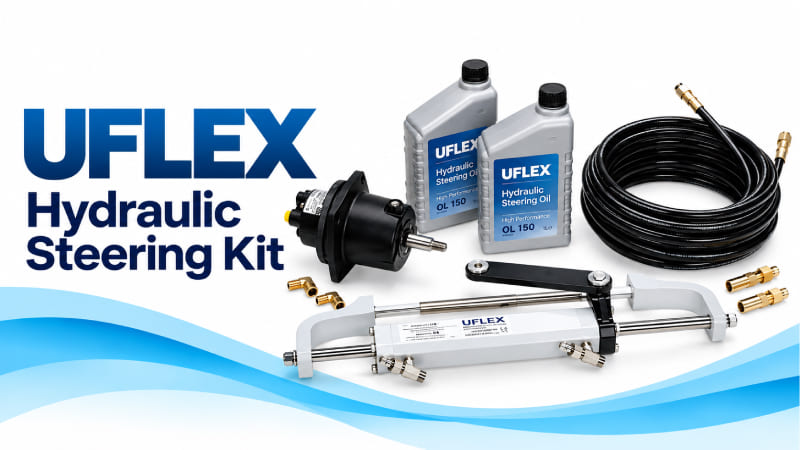
Best for: Owners with a compatible single outboard within the Uflex HYTECH application limit.
HYTECH packages generally use a UP20F helm and UC95-OBF cylinder, but the exact cylinder version must match your engine. Uflex offers different tubing and hose arrangements depending on the package. Do not assume every HYTECH kit has the same fittings or hose length.
For a more powerful engine, look at the other Uflex systems rather than using HYTECH beyond its stated limit. The company also makes heavier-duty outboard steering packages. Whichever one you choose, check the model numbers on the official application guide before ordering.
Key Features:
- HYTECH range is specified for compatible outboards up to 175 HP total
- Different cylinder versions for different outboard models
- Available packages include hydraulic helm and cylinder
- Exact hose or tubing package needs checking
VEVOR Hydraulic Steering Kit
VEVOR sells lower-cost hydraulic steering kits in several horsepower ranges, including 150 HP and 300 HP versions. Some packages include the helm, cylinder, hoses, and fittings together. This can look attractive if your old pontoon steering cable is due for replacement and you are comparing the total cost of a conversion. Read our full Vevor Hydraulic Steering Kit review for a closer look at the kit and fitment details.
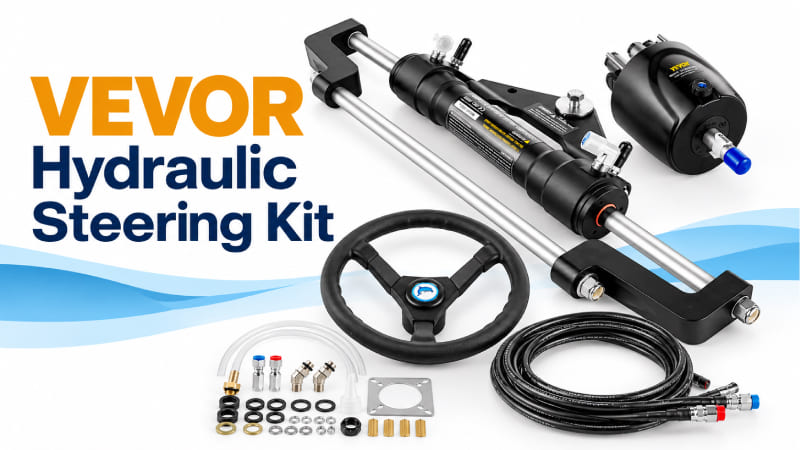
Best for: Budget-focused buyers who can confirm exact engine, cylinder, and installation compatibility.
Be careful about choosing a version only because the horsepower number matches your motor. Compatibility can also depend on the outboard brand, engine tilt tube, hose type, and physical clearance. Some VEVOR 300 HP listings specifically exclude certain Mercury applications, so the exact listing matters.
I would compare the instruction manual, replacement-part availability, and warranty support before buying. A cheaper steering kit is not good value if its cylinder does not fit or the instructions cannot confirm that it is appropriate for your pontoon.
Key Features:
- Several advertised horsepower versions are available
- Selected kits include helm, cylinder, and hydraulic hoses
- Can cost less than established premium systems
- Engine exclusions and pontoon suitability must be verified
SeaStar Pro Hydraulic Steering Kit
SeaStar Pro belongs in a different category from ordinary pontoon steering. Dometic makes it for high-performance, single-outboard applications that place more demands on the steering system. That may be relevant to a purpose-built performance tritoon, but it is not a kit I would automatically recommend for a normal family pontoon. Read our full Seastar Pro Hydraulic Steering Kit review for a closer look at the kit and fitment details.
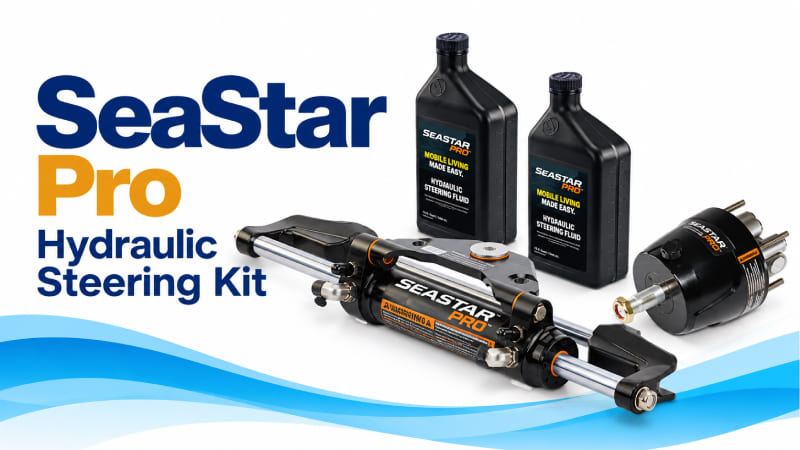
Best for: Specialist high-speed outboard applications when the boat builder and SeaStar application guide approve the setup.
The Pro range is designed around performance control, not simply making a regular pontoon more luxurious. Engine configuration, operating speed, propeller load, steering cylinder, and hose specifications all have to match the intended application.
If your pontoon cruises at ordinary recreational speeds, a correctly sized standard hydraulic system is usually the first place to look. I would only consider SeaStar Pro when the complete boat and engine combination calls for it, preferably with guidance from a marine steering specialist.
Key Features:
- Designed for demanding high-performance outboard applications
- Not necessary for most family pontoons
- Requires careful matching of speed, engine, helm, and cylinder
- Manufacturer approval matters more than the Pro name
Is BayStar Hydraulic Steering Good for Pontoon Boats?
BayStar is popular on smaller outboard boats, and its general maximum rating is 150 HP total. But there is an important point that is easy to miss: Dometic's BayStar installation instructions specifically say BayStar is not recommended for pontoon boats because some of these applications can have high steering effort.
So I would not put BayStar on a list of default recommendations for pontoons simply because the horsepower number fits. The BayStar Hydraulic Steering Kit review explains the system itself, but pontoon owners should compare a properly selected SeaStar system or speak with the steering manufacturer before buying. A 150 HP rating alone is not enough to confirm suitability.
How to Choose Hydraulic Steering for a Pontoon Boat
First, write down your outboard's exact make, model, horsepower, and whether you have one engine or two. A single-outboard kit should not be assumed to work on a twin-engine pontoon. The engine manufacturer's steering requirements and the hydraulic steering maker's current application chart are more useful than a generic product title.
Next, think about how you actually use the boat. A slow family pontoon, a heavier tritoon, and a high-speed performance pontoon can place different loads on the steering. If you are also comparing other outboard applications, my guide to the best hydraulic steering for outboard boats covers the wider choices and their main differences.
Finally, measure the available space and the hose run. The cylinder needs full movement as the engine steers and tilts. At the console, the helm needs enough room behind the dashboard, including space for the hose connections. On some pontoons the steering lines also have a long run through the deck area, which makes correct routing and hose length especially important.
Pontoon Boat Steering System: Cable, Helm and Console
When people search for a pontoon boat steering system, they may be talking about several different parts. The steering wheel is attached to a helm inside the pontoon boat steering console. A mechanical setup uses a steering cable to move the outboard. A hydraulic setup uses a helm pump and hydraulic lines connected to a steering cylinder at the motor.
Changing to hydraulic steering does not normally mean replacing the whole console. However, the hydraulic helm may need a different mounting hole, a compatible steering wheel connection, and enough clearance behind the dash. Before ordering, remove the access panel if you have one and check how much usable space is there.
If your pontoon steering cable is hard to move, do not assume a new hydraulic kit is the only answer. Corrosion in an old cable, a damaged helm, or binding around the engine can also cause stiff steering. A qualified technician can help identify whether repair or a full conversion makes more sense.
Why Is My Pontoon So Hard to Steer?
Start by noticing when the wheel feels heavy. If it is difficult even with the boat stopped and the engine off, the problem may be a seized mechanical cable, a binding steering mechanism, or an issue in the existing hydraulic system. If it turns reasonably at rest but becomes much harder under power, propeller torque, engine trim, and steering-system capacity may be contributing factors.
On a hydraulic system, low fluid, trapped air, hose restrictions, leaks, and incorrect installation can also cause steering problems. A soft or delayed response is different from a wheel that becomes unusually hard to turn, and each needs proper diagnosis. The same basic checks apply to SeaStar hydraulic steering systems and other brands.
If steering suddenly becomes stiff, jerky, loose, or unpredictable, stop using the boat until the cause is found. Steering is a safety-critical system, and forcing a wheel or ignoring a leak can make the situation worse.
Hydraulic Steering vs Pontoon Steering Cable
Mechanical cable steering can be perfectly suitable for smaller pontoons when it is correctly rated and in good condition. It is generally less expensive and has fewer hydraulic parts to service. The downside is that the cable can become stiff with age, and engine torque may make the wheel harder to hold or turn.
Hydraulic steering replaces the long mechanical control cable with a pump, fluid lines, and cylinder. It can reduce feedback at the wheel and is often useful on bigger outboards. But it costs more, requires proper bleeding, and introduces fluid, seals, hoses, and fittings that need inspection.
Also remember that ordinary hydraulic steering is not the same as hydraulic power steering. Most manual hydraulic kits do not have a powered pump helping you turn the wheel. If you want very light steering effort, especially on a demanding setup, discuss a compatible power-assist system with the manufacturer instead of assuming every hydraulic kit provides powered assistance.
Installation Checks Before You Buy
Look at the complete package before removing the old steering. A hydraulic steering kit for pontoon boats may require a helm, outboard cylinder, hoses or tubing, fluid, fittings, and bleeding equipment. Some kits include nearly everything; other packages leave the hoses as a separate purchase. Measure the actual route through the pontoon, allowing for safe bends and engine movement.
Confirm the helm can fit the dash, the cylinder is approved for your outboard, and nothing interferes with the cylinder as the engine turns and tilts. Route hydraulic lines away from sharp edges, heat, and places where movement could pinch or rub them. Use the manufacturer's approved fittings and fluid, and do not mix unrelated steering components unless the manufacturer explicitly approves the combination.
Bleeding is an important part of the installation. Air in the lines can make the steering feel spongy or unresponsive. After filling and bleeding, inspect every connection and test the full steering and tilt range as instructed. If you cannot confirm the fitment or perform the checks safely, have the installation inspected by a qualified marine technician.
Frequently Asked Questions
What is the best hydraulic boat steering system for a pontoon?
For many compatible single-outboard pontoons, standard SeaStar is a strong system to compare first. Uflex also offers choices for different engine sizes. The best answer depends on the exact outboard, boat speed, engine arrangement, and manufacturer's approval.
Why is my pontoon so hard to steer?
A worn steering cable, engine torque, poor trim, binding parts, or a hydraulic fault can make steering heavy. Whether the wheel is hard to turn at rest or only underway helps narrow down the cause. Do not operate the boat with unsafe steering.
What are the downsides of hydraulic power steering?
A powered hydraulic system adds cost, complexity, and more components to maintain. Ordinary manual hydraulic steering also has disadvantages, including hoses, fluid leaks, bleeding, and higher purchase cost compared with many cable systems. The two systems should not be confused.
Can I replace a pontoon steering cable with hydraulic steering?
Often yes, provided the new system is approved for your boat and engine. You normally replace the cable helm arrangement with a hydraulic helm, hoses, and engine cylinder. Measure the console clearance and hose route first.
Is BayStar hydraulic steering recommended for pontoon boats?
No, not as a general recommendation. Dometic's BayStar instructions specifically advise against use on pontoon boats because of possible high steering effort, despite the system's general 150 HP limit.
Do I need a new pontoon boat steering console for hydraulic steering?
Usually not. You may be able to use the existing console, but the new helm must fit the dashboard opening and there must be enough room behind it for the body of the pump and hose connections.
Will any hydraulic steering kit for pontoon boats fit my outboard?
No. Horsepower is only one requirement. Check the exact outboard model, steering tube or mounting arrangement, available cylinder clearance, operating speed, and any restrictions in the maker's application guide.